
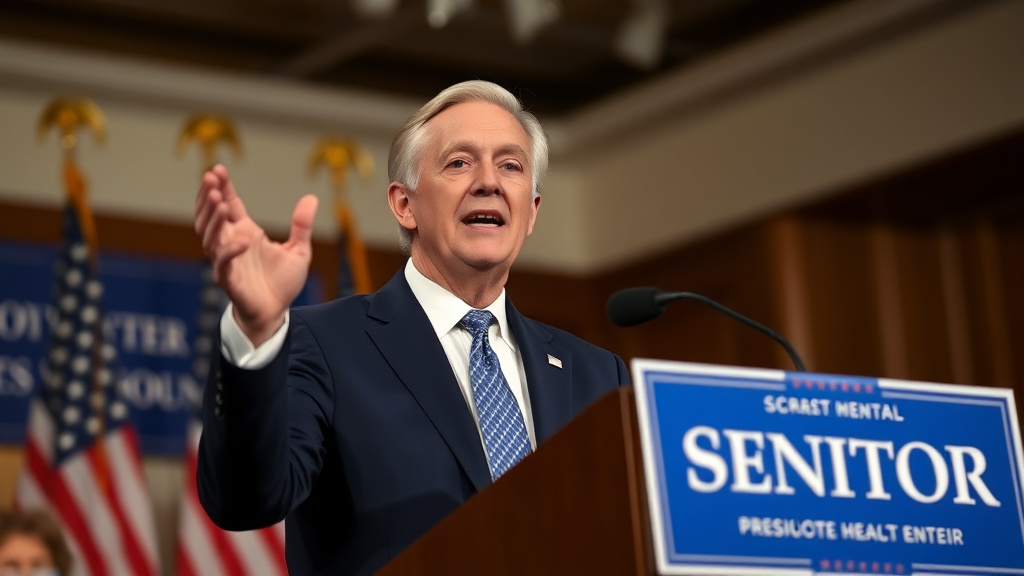
In a major political announcement, a leading senator has formally announced a presidential campaign with healthcare reform at its core. Amid growing public concern over rising medical costs and insurance availability, the candidate has positioned themselves as a leader in major health policy changes. This declaration represents a pivotal moment in the upcoming election cycle, as healthcare emerges a key issue. The senator’s comprehensive platform pledges to address systemic inefficiencies and increase coverage for millions of Americans.
Campaign Direction and Healthcare Priorities
The senator’s platform strategy focuses on building a stronger equitable and accessible healthcare system for all Americans. Understanding that medical expenses remain a leading cause of financial hardship, the candidate advocates for sweeping changes to decrease spending while strengthening healthcare quality. The platform prioritizes preventative care, mental health services, and drug price controls. By confronting core drivers of healthcare inflation, the senator aims to ensure that no American experiences financial ruin due to urgent medical situations or ongoing disease management.
Key healthcare focuses include extending Medicaid access to underrepresented populations and enhancing protections for individuals with existing conditions. The campaign advocates for more resources to rural healthcare facilities and remote healthcare technology development. Additionally, the senator backs funding medical research and professional development to reduce physician shortages. These efforts demonstrate a commitment to establishing a sustainable healthcare system that meets the needs of diverse communities and adapts to emerging public health challenges confronting the nation.
Important Health Reform Proposals
The senator’s campaign prioritizes extensive healthcare restructuring aimed at resolving structural inefficiencies and broaden access across the nation. These plans intend to reduce out-of-pocket expenses while upholding quality care standards. By prioritizing preventative medicine and efficient administrative processes, the candidate works to build a more efficient healthcare system. The reform agenda reflects extensive research and engagement with healthcare professionals, patient organizations, and policy experts across the nation.
Broad-Based Coverage System
The universal coverage framework serves as the cornerstone of the senator’s health reform proposal. This comprehensive approach aims to ensure healthcare coverage for all Americans irrespective of employment status or pre-existing conditions. The framework emphasizes fair access to medical services and elimination of coverage gaps that present challenges for vulnerable populations. By establishing baseline coverage standards, the proposal aims to decrease urgent care utilization and improve overall public health outcomes significantly.
Establishing this framework demands significant government funding and reform of existing insurance markets. The senator outlines a gradual implementation commencing with expansion of Medicaid programs in underserved regions. Government-private sector collaborations would support changeover phases for current insurance providers. The plan features tax breaks for employers maintaining supplemental coverage options. Comprehensive data collection systems would track performance and enable ongoing modifications to support program success and sustainability.
- Expand Medicaid coverage to all qualified low-income individuals across the nation
- Establish federal baseline insurance standards for essential health benefits
- Develop regional health cooperatives to improve affordability and competition
- Introduce sliding-scale premium structures based on family income
- Develop unified digital health records across all provider networks
Economic Impact and Deployment Plan
The senator’s health policy reform proposal carries substantial economic implications for both federal budgets and private sector activities. Analysts forecast that expanded coverage programs could generate substantial lasting savings through preventive care services and fewer emergency department visits. However, putting it into practice demands significant upfront investment in infrastructure, technology, and workforce training. The campaign stresses that these upfront costs constitute essential infrastructure development that will ultimately lower total healthcare spending and boost economic performance across all demographic segments.
The deployment plan emphasizes a gradual implementation, launching demonstration projects in communities with limited access before national expansion. The senator supports coordinated collaboration between public agencies, healthcare organizations, and insurance companies to enable seamless transition and reduce market disruption. Key initiatives feature simplified administrative procedures, digital healthcare system upgrades, and incentive-based programs for rural medical providers. This methodical framework seeks to balance far-reaching reform objectives with economic realities, guaranteeing sustainable healthcare transformation.
Campaign Growth and Public Response
The senator’s candidacy launch has sparked substantial momentum throughout various demographics and geographic regions. Initial poll results suggests strong support among voters focusing on accessible and affordable healthcare. Press attention has been comprehensive, with major news outlets showcasing the candidate’s health policy initiatives prominently. Community mobilization initiatives have mobilized volunteers across the nation, creating campaign offices in crucial early-voting states. The excitement around this campaign demonstrates widespread frustration with the current healthcare system and push for substantive change.
Public response has been quite positive, particularly among young voters and those with restricted insurance access. Town halls and campaign events have pulled in large audiences eager to interact with the senator’s proposed agenda. Social media analytics demonstrate significant online support, with messages about healthcare reform gaining broad appeal. Opposition groups have also organized, creating conditions for meaningful policy discussions throughout the campaign. This energetic engagement underscores the prominence of healthcare as a key election issue.
