
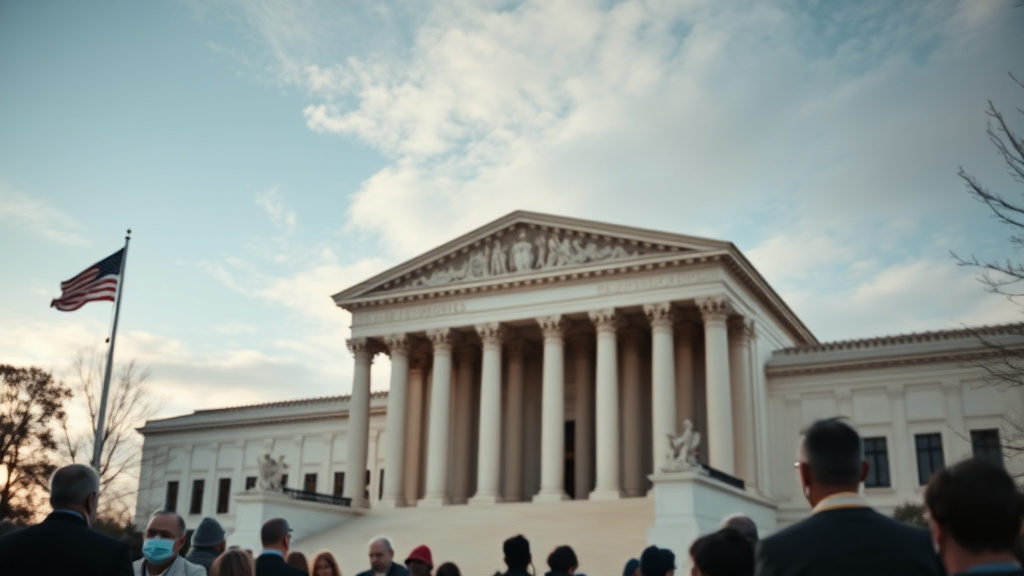
In a pivotal decision that has sent shockwaves through the political landscape, the Supreme Court has issued a ruling on a crucial electoral case with significant impact for American democracy. The decision promises to reshape electoral procedures, shape future electoral contests, and intensify partisan debates across the nation. This article reviews the Court’s judgment, analyzes its legal reasoning, assesses the near-term political effects, and considers how this decision may significantly reshape voting access and representation for millions of Americans in the years ahead.
The Court’s Decision and Its Reach
In a 6 to 3 decision, the highest court fundamentally altered the terrain of voting rights jurisprudence by upholding a contested state electoral statute. The majority opinion concluded that specific ballot access limitations do not breach the Voting Rights Act, marking a significant departure from decades of precedent. This decision essentially allows states more flexibility in enacting electoral regulations previously challenged as discriminatory. The decision’s scope extends beyond the immediate case, establishing new standards for evaluating ballot access standards nationwide and potentially affecting millions of voters across multiple states.
The Court’s majority highlighted state authority and federalism concepts in electoral matters, arguing that Congress went too far in previous voting rights legislation. The ruling allows states to implement voter identification requirements, reduce early voting periods, and alter registration procedures with minimal federal oversight. Legal experts contend this decision substantially alters the distribution of authority between federal and state governments concerning electoral rules. The scope encompasses not only current voting laws but also establishes a framework for evaluating upcoming voting laws, possibly affecting ballot access rules for the foreseeable future.
Constitutional Arguments Presented
The prevailing view grounded its reasoning in the Fifteenth Amendment and the Constitution’s explicit delegation of voting administration to states. Justices argued that the Voting Rights Act’s preclearance requirement surpassed Congress’s power under the Fourteenth and Fifteenth Amendments. They maintained that modern voting conditions vary significantly from past patterns of discrimination, rendering certain federal oversight mechanisms obsolete. The majority emphasized that states possess valid concerns in election integrity, fraud prevention, and administrative efficiency, which justify reasonable voting restrictions that do not deliberately favor one group based on race or protected classes.
Proponents of the decision cited the Constitution’s foundational structure granting states primary responsibility for establishing voting qualifications and procedures. The majority view cited past examples indicating that federal intervention ought to target only intentional discrimination, not disparate impacts on various population segments. Constitutional scholars who share this perspective argue that the decision restores appropriate constitutional equilibrium by restricting federal regulatory expansion. The opinion stressed that voting access must be balanced against election security and electoral management issues, rejecting the notion that all restrictive voting measures represent unconstitutional discrimination.
Dissenting Opinions and Objections
The three dissenting justices published a scathing critique, cautioning that the decision dismantled voting rights protections created through long periods of civil rights campaigns. They maintained the majority overlooked verified data of continued racial discrimination in voting and underestimated states’ long-standing tendency to restrict minority voters. The dissent highlighted that the Voting Rights Act’s preclearance requirement had successfully prevented discriminatory voting laws from becoming law, safeguarding millions of voters. Dissenters argued that striking this safeguard would inevitably lead to more stringent voting rules having a greater impact on Black, Latino, and other minority voters nationwide.
Critics of the ruling expressed significant worries about its effects for representative democracy and minority participation in elections. They pointed to studies showing that voter identification requirements and shortened early voting windows disproportionately impact voters with lower incomes and communities of color. The dissent warned that the decision would prompt states to implement increasingly restrictive voting measures without federal oversight. Legal analysts anticipated the ruling would spark a series of voting law alterations, potentially disenfranchising millions while claiming legitimate electoral purposes, fundamentally undermining the principle of equal voting access that forms the foundation of democracy.
Political Reactions and Political Party Responses
The Supreme Court’s ruling has sparked intense partisan responses from both major political parties, each interpreting the ruling through their different political lenses. Democrats have expressed deep concern about potential voter suppression implications, arguing that the decision undermines decades of voting rights protections and disproportionately affects minority communities. Republican leaders, conversely, have celebrated the ruling as a win for electoral integrity and states’ rights, contending that the decision appropriately restores balance to election administration and empowers states to establish their own voting standards.
Lawmakers from Congress from both parties have called for immediate action in reaction to the Court’s decision. Some Democratic legislators have pledged to advance legislative solutions to restore voting protections, while Republican leaders have vowed to uphold the ruling against court challenges. Rights advocacy groups have mobilized their supporters, scheduling rallies and public campaigns. The decision has also prompted discussions about potential constitutional amendments and coming legislative agenda that will influence political debate during the upcoming election season.
- Democratic leaders demand immediate congressional legislation on voting rights.
- Republicans praise the decision as restoring proper constitutional equilibrium.
- Civil rights organizations coordinate nationwide advocacy campaigns and protests.
- State authorities prepare implementation plans consistent with ruling.
- Congress examines constitutional amendment proposals tackling access to voting.
Extended Implications for Election Legislation
The Supreme Court’s ruling establishes a significant legal precedent that will affect voting law structures across numerous states for decades to come. Legal scholars anticipate that trial courts will cite this ruling when adjudicating future voting rights cases, potentially creating a cascade of related lawsuits. The decision substantially transforms the legal limits around electoral access and state regulatory authority, forcing state lawmakers to reassess current laws and propose new voting mechanisms that conform to the Court’s interpretation of electoral law.
Beyond direct policy changes, this ruling will likely catalyze wider-ranging reform efforts in how states manage voting processes and verify voter eligibility. Political organizations and advocacy groups will mobilize resources to support or contest voting regulations in accordance with the Court’s recently created standards. The decision may also spur constitutional changes or legislative intervention as lawmakers seek to clarify electoral procedures and safeguard voter rights. These long-term consequences will influence the political landscape of American politics and determine electoral accessibility for generations of voters nationwide.
